
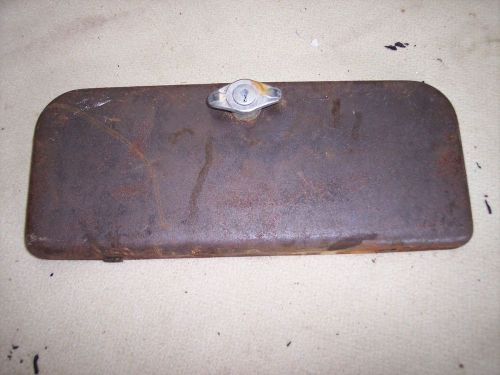
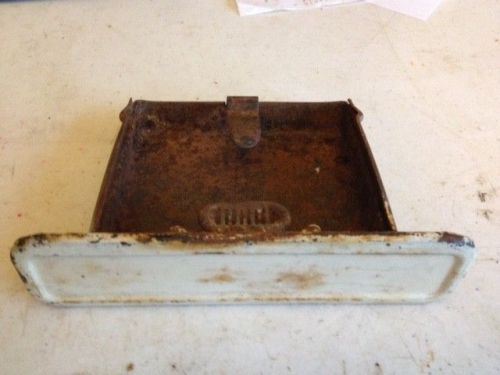
1937 1938 Chevrolet Glove Box Door Oem on 2040-parts.com
Hortonville, Wisconsin, United States
|
Up for sale is a glove box door which was removed from a 1937 Chevrolet Tudor Sedan. Not sure what other years this will fit so do your own homework. Key words: Hot Rat Street Traditional Original Rod NOT CHINESE |
Dash Parts for Sale
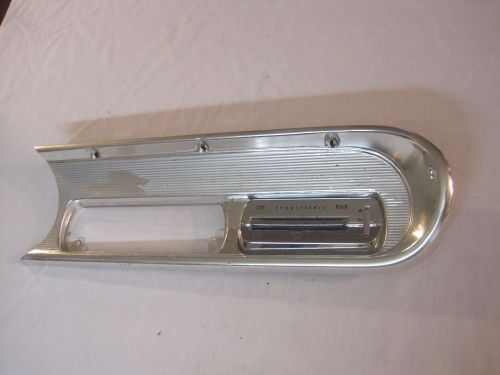 1963 ford fairlane 500 dash trim and heater control plate c3ob original(US $99.00)
 Dakota digital dash 58 59 60 61 62 chevy corvette 6 gauge cluster vfd3-58c-vette(US $1,306.25)
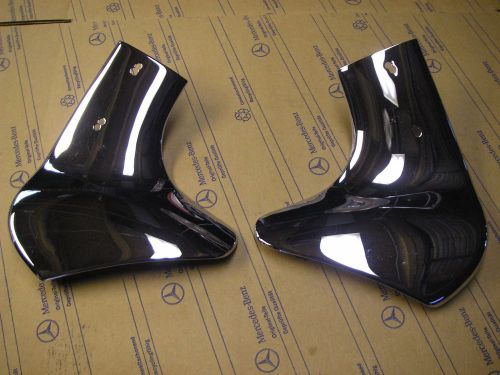 Mercedes benz 300 s-sc 1951 thru1958 coupe cabriolet & roadster gravel guards(US $499.99)
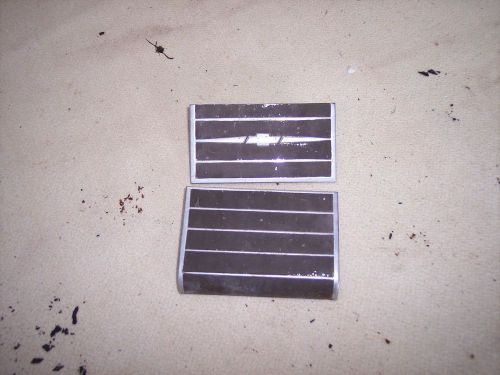 1937 1938 chevrolet radio ashtray delete plate oem(US $85.00)
 Vintage 1967 1968 1969 1970 1971 1972 chevy c10 truck ashtray. original oem gm!(US $7.00)
 Vintage 1950 working chevy interior dash insert panel w/clock ashtray lighter(US $145.95)
How CATIA for Creative Designers helps to keep Recaro in the hot seat
Fri, 04 May 2012Dassault Systèmes' latest release, CATIA for Creative Designers, is a software solution that bundles applications to help designers imagine, create, share and experience their product designs, virtually. Johnson Controls division Keiper, is using Dassault Systèmes' latest CATIA software in the design process of its new Recaro vehicle seating systems. Mathias Gischke, Head of the Style and Surfaces department at Johnson Controls' Technical Center in Kaiserslautern, says: "13 years ago we decided to use ICEM Surf, the Class-A leading software at the time.
The Manx makes it!
Tue, 20 May 2014After 1,300 miles, 96 hours, two engines, three transmissions, a busted exhaust, a bent shifter, a stuck throttle, countless bottles of water, much swearing and the looming threat of heat exhaustion, Bruce Meyers and the Meyers Manx Race Team buggy drove through the finish line at the town square of San Jose Del Cabo and completed the damn 2014 NORRA Mexican 1000 once and for all. Finally -- for Meyers' and the number 1964 buggy's first time -- they had successfully navigated the Baja Peninsula and finished under their own power. The poor Meyers Manx Dual Sport was looking worse for the wear when it streamed into town at 5:30 p.m.
MIT researchers rethink electric-car batteries
Wed, 08 Jun 2011Researchers at the Massachusetts Institute of Technology say a new battery design for electric vehicles could be a lightweight and inexpensive alternative. The goal for the team's three-year project, launched in September 2010, is to have a functioning prototype ready to be engineered as a replacement for existing electric-car batteries. At this point in the project, the prototype uses a “semi-solid flow” to separate the two functions of a battery--storing energy and discharging it when needed--into separate physical structures.