
1981 Suzuki Ds 100 on 2040-parts.com
Alton, Illinois, United States
|
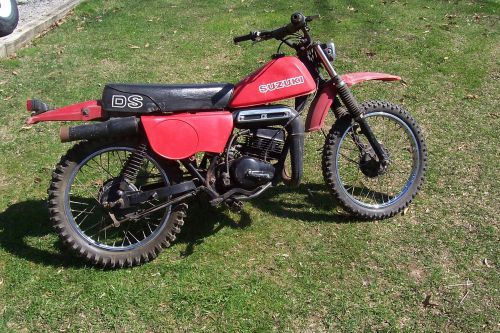
1981 Suzuki DS 100, Nice shape for the age Ran great a few years ago and its been sitting in the shed Sence, It fires right up on starting fluid, There is a couple dents in the gas tank The seat has a couple tears The wheels still have nice chrome on them Tires are fair and look good but have been sitting a while and showing lite cracks but hold air fine The motor is 2 stroke with oil injection and has great compression, all original bike with original title in hand. any ? please ask Shipping is up to the buyer will help load ..or can meet at a certain distance
|
Suzuki for Sale
 1996 & more suzuki motorcycle gsf600s service manual & binder(US $42.99)
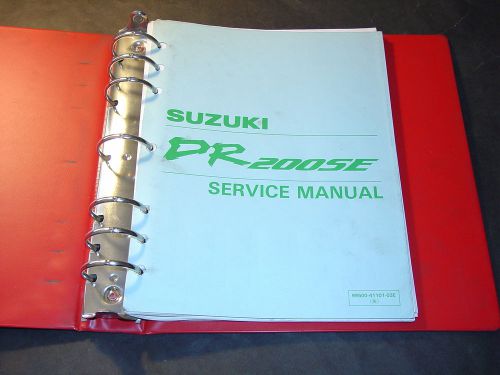 1996 suzuki motorcycle dr200se service manual & binder(US $51.99)
 1996-99 suzuki motorcycle gsf600 service manual(US $39.99)
 1996 suzuki motorcycle rm125 owners service manual(US $38.99)
 1996 suzuki atv 4 wheeler lt80 owners manual(US $30.99)
 1996-2002 suzuki motorcycle gsf600s service manual & binder 99500-35040-03e(US $49.99)
Ford Mondeo gets Tri-Fuel capability
Thu, 12 Mar 2009I’ve said it before, and I’ll say it again. You have to admire Ford. They do so much right and so little wrong (at least in Europe) that they really do deserve enormous success.
New Audi Q7 (2013) to shed weight. But no Audi Q9 planned.
Fri, 12 Aug 2011The 2013 Audi Q7 will be much lighter than the current Q7 The Audi Q7 was rather late to the SUV party of the noughties, not hitting the road until 2005. That meant the Q7 had a bit of an edge when it launched, as it was newer than its competition, but it also means the Q7 is still soldiering on when its competition has already launched newer, shinier models. But Audi are working on fixing that, and fixing the biggest criticism of the Q7 in the process – its sheer weight and size.
Volvo tests flywheel technology to cut fuel use
Tue, 31 May 2011Volvo is testing flywheel technology--being used in Formula One racing to give cars an extra boost--as a technology that could help cut fuel use in future cars by as much as 20 percent. Flywheels recapture energy normally lost as heat during braking. That energy can then be used to help propel the car.