
Performance Boat Paint For Bottoms With Teflon on 2040-parts.com
Hudson, Wisconsin, United States
|
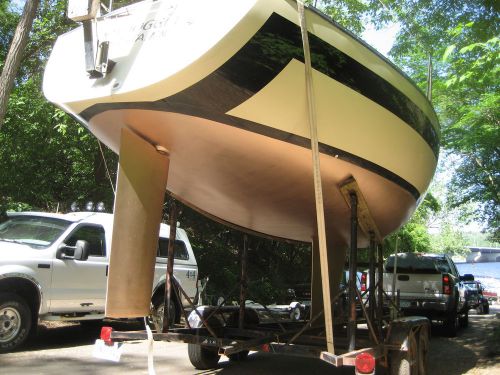
Smooth Sailing Boat Bottom Paint is a low drag, non-stick bottom coating which uses copper to keep growths away. Also available is Teflon only clear, or non copper, hard long lasting Urethane Teflon in White, charcoal, navy and red. For a free boat bottom paint cost analysis including step by step instructions and a profile of everything needed to do a professional job go to http://www.boat-bottom-paint.com:80/costanalysis.aspx This copper coating relies first on the large polytetrafluoroethylene (PTFE) well known for its use in non-stick cookware. This molecule produces a drag coefficient smoother than ice. Also uses is copper. Smooth Sailing copper will change color over time when immersed. The true color will establish itself after the boat has been launched. Often the color will turn from copper to a dark gray tone. Because color change will occur over time, you should try to keep the Smooth Sailing Antifouling coating as close to the true waterline as possible. Wet sand and apply with roller and brush. One to two quarts covers most boat bottoms. Call 800-466-8910 www.boat-bottom-paint.com for more details. Growth on boat bottoms is perhaps the major factor in reducing speeds and increasing the energy required moving through the water. If you want a slippery boat which produces the most speed with the least energy you need to focus on the part of your boat that creates resistance to the water it passes through. A great hydrodynamic shape and maximum water line length are all critical. But once the boat is designed and built what you can add to the mix is a smooth, low drag bottom. That smooth bottom means keeping the ravages of nature away from your boat bottom. To date the best tools you have for maintaining a smooth boat bottom is to keep the boat out of the water. But for those of us that can’t remove the boat when in use, we need to provide our boat bottom with the smoothest coating available. And we need to discourage organic growths by using materials like copper to discourage colonization on our boat bottom. Growth on your the bottom of you boat can reduce its efficiency by as much as 10% and that growth can be released from a properly coated bottom when speeds of 10 to 15 knots are reached. Once fouling has established a hold on a boat hull it will rapidly spread or "colonize" the surface. Prevention is therefore better than the cure of having to remove the fouling by scraping. If you can keep growths off of your boat bottom you can. Use less fuel
Other reasons to keep your bottom free from fouling Protection Speed and Efficiency Antifouling boat bottom coatings are not meant to be a cosmetic or decorative coating. While no boat bottom paint can always keep growths away a non-stick Teflon type surface helps dramatically. Smooth Sailing boat bottom coatings rely first on the large polytetrafluoroethylene PTFE molecule which produces a drag coefficient smoother than ice. As water flow is increased over the boat bottom with speed most growths will slip off the boat bottom, but just like eggs in a pan a little help does not hurt. You may want to brush, pressure wash or wipe your bottom periodically. Copper is used for Antifouling in one of our coatings and has been protecting boat bottoms from growth since the 1700’s when Britains Fast Ships like the Cutty Sark raced from the orient to England with cargo’s of fresh Tea. Most marine life does not like the taste of copper and will try to avoid it. Because your boat bottom is so important to the boat performance the bottom should be re-coated as often as possible. Smooth Sailing’s Antifouling coatings will retain their Antifouling properties as long as the coating is on the hull even if stored dry. Sanding between coats will add to the longevity of the bottom jobs. By sanding the bottom you can get more coats to adhere and forestall the day when too many coats means that you must remove all the Antifouling coatings from the surface and start over. The boat bottom should always be sanded before an additional coat even if they have just been power washed. Antifouling performance factors While tin and other biocides have been used on boat bottoms over the years. The proven standards still relates to the level of copper used. Yet Copper is not the only determining factor of how well an Antifouling paint will perform. The resin-binder system, the material that holds the paint together, is equally important. In addition to holding the paint together, the resin-binder system determines how fast the copper and other biocides are released. The resin-binder system should be carefully tailored for the amount and type of copper used to obtain maximum efficiency. The amount of copper affects the life of an Antifouling coating but the sophistication of the resin-binder system to hold and release copper is far more important to the effectiveness of the Antifouling effect. The best Antifouling boat bottoms will release biocide at a nearly constant rate throughout its life. If the resin-binder is correct, the highly efficient copper biocide is less dependent on large amounts of copper to deliver the best possible performance. Why use Fluorourethane on your boat bottom? Fluorourethane was originated by the U.S. Naval Research Laboratories (NRL) in the early 1970.s. It was a combination of a fluorocarbon (Teflon) molecule with a urethane molecule. The material was unique in that it provided a surface with approximately the same coefficient of friction as the Teflon, was hydrophobic, UV resistant, and at the same time provided an abrasion resistance four times that of Teflon. The fluorourethane was originally tested on several ship hulls for the U.S. Navy. One boat tested was a harbor tugboat in Chesapeake Bay. The coating lasted 11-1/2 years compared to a conventional hull coating which lasted only 18-24 months. Of major interest was the fact that no rust or corrosion occurred under the coating. And biofouling, such as barnacles, could be removed with a high-pressure water jet instead of chipping or shot blasting. # |
Paint & Maintenance for Sale
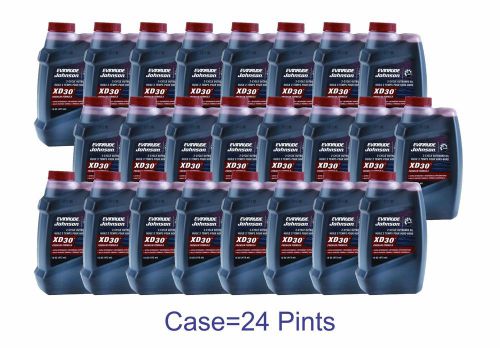 Oem brp johnson evinrude xd 30 2-cycle oil 24 pints case 764347(US $105.41)
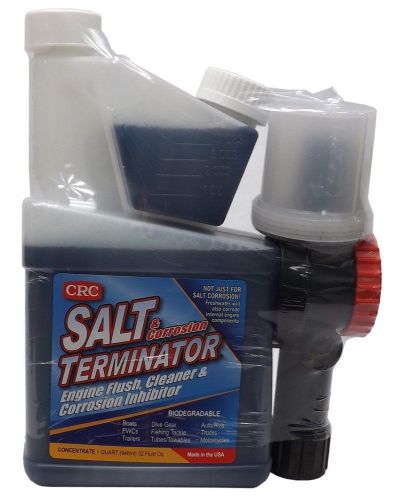 Crc sx-32m marine salt terminator engine flush concentrate with mixer - 32 oz.(US $29.99)
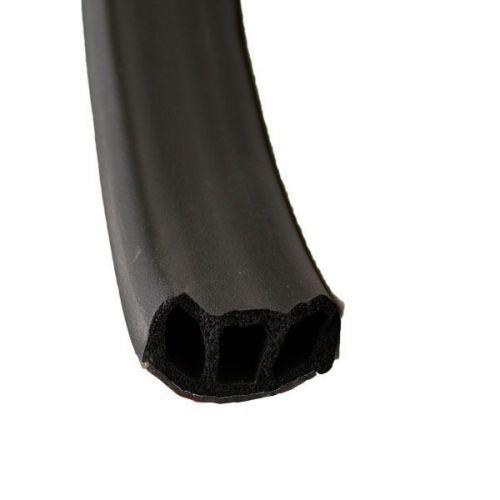 Sea ray 1830770 black 1 1/2 x 3/4 foam gasket boat windshield molding (ft)(US $2.49)
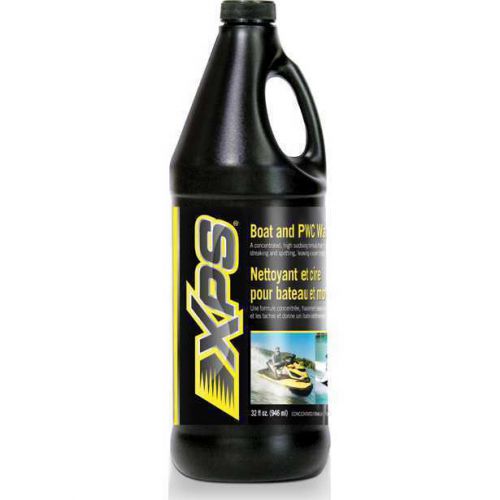 Sea-doo xps boat & pwc jetski wash & wax(US $10.99)
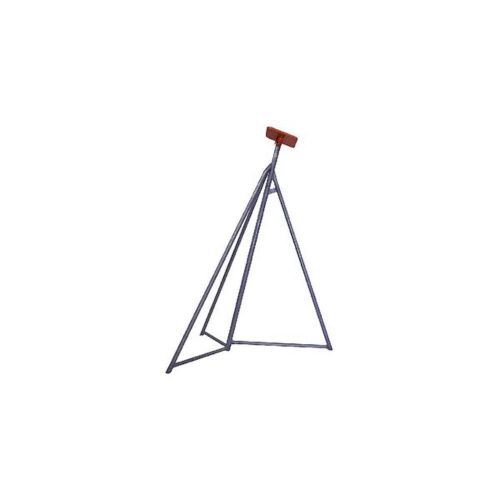 Brownell boat stands galvanized sail boat stand orange top 79-96" sb0galv lc(US $269.99)
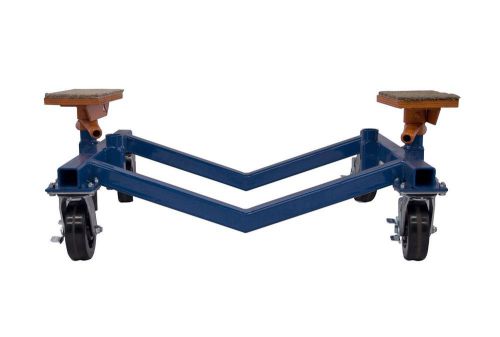 Brownell boat stands heavy duty boat dolly tops 29-46" hight with orange bd2 lc(US $549.99)
Bentley uses 3D printing to prototype new designs [w/Video]
Tue, 17 Sep 20133D printing is changing the way the world makes things by helping people of all disciplines to enhance and refine their ideas cheaply, quickly and effectively. Bentley is the latest carmaker to utilize the technology to fabricate and prototype different parts to see how they'll look and work on the finished design. Using 3D printers, designers can produce parts from the exterior and interior such as the grille, tires, headlamps and door handles as well as combine different types of contrasting materials, ranging from hard plastics to rubbers of different tensile strengths. The technology allows the user to create a solid 3D object straight from a digital model by printing layers of material on top of each other. This process rapidly decreases the delivery time, as parts can be printed overnight, and allows designers to be more creative in their ideas because of the reduced cost. Bentley isn't the first carmaker to use 3D printing technology. Audi announced last year it was beginning to prototype vehicle parts using 3D printers.
Footballer quizzed over 'collision'
Tue, 25 Feb 2014ARSENAL MIDFIELDER Mesut Ozil is thought to have been questioned by police over allegations the car he was driving hit a photographer. The alleged incident occurred on Friday night in Highgate, north London. A Metropolitan Police spokesman said: "Police were called at approximately 7.18pm on Friday 21 February to reports of an alleged collision between a vehicle and a member of the public in Sheldon Avenue N6.
Maserati GranCabrio Sport at Geneva
Mon, 21 Feb 2011Maserati GranCabrio Sport With only a week until the press days for the Geneva Motor Show kick off, news of the reveals to be are coming in quickly. This morning we get confirmation of a harder-edged GranCabrio from Maserati – the Maserati GranCabrio Sport. Which we assume will be the Maserati GranTurismo Convertible Sport in the US and Oz.